There go an old tale of a king and his men.
He ordered a chair to be placed at the edge of the waves, just beyond their reach. He called to them; “This land is mine, therefore do not rise further and wet the robes or limbs of your master!”
The sea accepted this challenge.
Let me larn you a lesson of the power of nature, an unstoppable force, and its battle with human ambition. A city that washed away.

The Wuffingas dynasty, rulers, landed on these shores. Their ambition for a new land led them here, a place where the sky stretches like a blanket, always reaching the corners of your eyes. Life-giving, flat and forgiving, they chose to settle here, starting a new generation of people and a new path in the history of the world. This kingdom was called East Anglia, and for a time was one of the richest and most powerful of the seven kingdoms.
In the mid-600s, a project began to build a town worthy of trade with their European ancestors. They would sell wool and pottery, and receive silver and power. Gems from India and Sri Lanka and silver buckets from the Byzantine empire graced the kingdom, lining the pockets of merchants. It grew as far as they eye could see, and commanded power that’s believed to this day to be of huge religious importance, whilst being the capital of the region.
In a few centuries, this port city rivalled, then elite, London. Coins being swapped for goods daily, always bustling, ships in and out of the harbour. When the Normans arrived from over the channel in their ships, slaying the king and taking the throne, they changed the structure of English society as it was. By this point, there were three churches and a population of about 3000 – a large settlement for its time.
At its peak, a little less than 2 centuries after, the number of people living in the town was around 5000 and the number of churches had grown rapidly to accommodate, somewhere between 8 and 19, counting monasteries and hospitals. Its size matched London of that era too, which by this time was the capital of England.
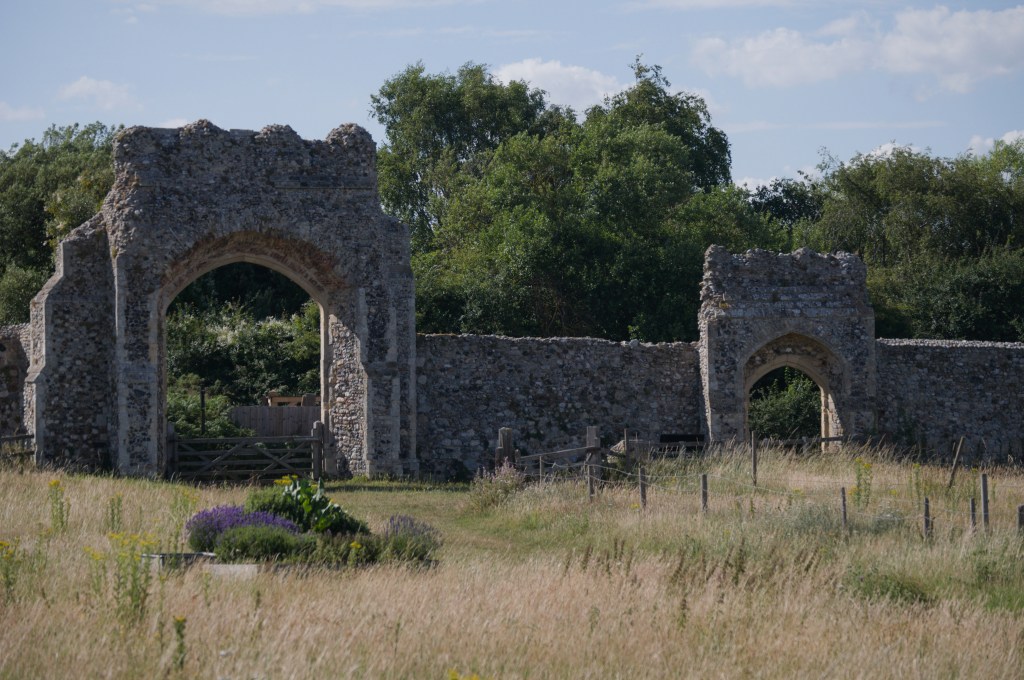
The mouth of the river that fed the city was once by nearby marshes, at an area that once sheltered this city and gave it the perfect place for trade to begin with. But what the Wuffingas kings would never know and what St Edmund would never hear were the final tolls of the churches. Churches that once stood between the cliff edge and a point about 1.5 kilometres out to sea in the city of Dunwich. Once the most powerful and richest port in England.
In the years after its peak, many great tragedies struck. Huge rainstorms flooded the river causing it to burst its banks and wash hundreds of houses away, 400 during a single storm was noted in the history books. Following this, the mouth of the river migrated a few miles north to Walberswick due to the storm surge blocking the original mouth with shingle.
The Black Death in 1348 stripped the population back further, then the following Great Drowning of Men was the final straw for the prosperity of Dunwich, and the town was mostly abandoned from that point in the 1400s as most of its population had died and the city could no longer keep functioning.
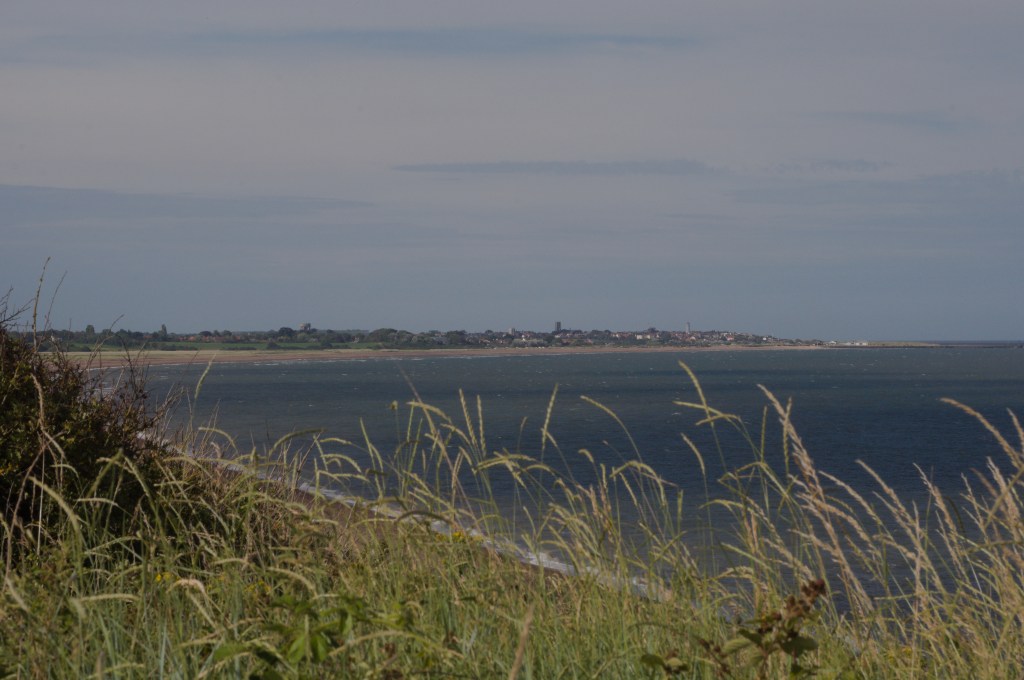
In following years, the waves and the tides claimed more of this once gilded city. Meter by meter, house by house, street by street and church by church, it was stolen by the ocean. You might remember the next street over, your parents remember the playground down the road. Your kids might not get to see your childhood home. A slow, messy, and unyielding decline would continue to take swathes of land for itself.
In the early 20th century, the last church, All Saints’, succumbed to the power of the things we failed to control, and slipped over the cliffs into the North Sea. Bones from the graveyard surrounding it falling out the crumbling crag into the ocean as if the spirits and memories of the land too are vanishing into the tide.
Today, the final resident of the once prosperous town, Jacob Forster, remains. His grave is all that is left, and in a few decades, not even that will be here. A city, once a thriving royal port full of trade and power, bustling with people and lives, living for centuries as the heart of East Anglian ambitions, had all but disappeared.
Nearby the site is the Village of Dunwich. Whilst not part of the original city and is modern in comparison, they are who keep what’s left of this site safe and maintained, especially the monastery ruins that still stand on the outskirts of the city, and that remain because of this.
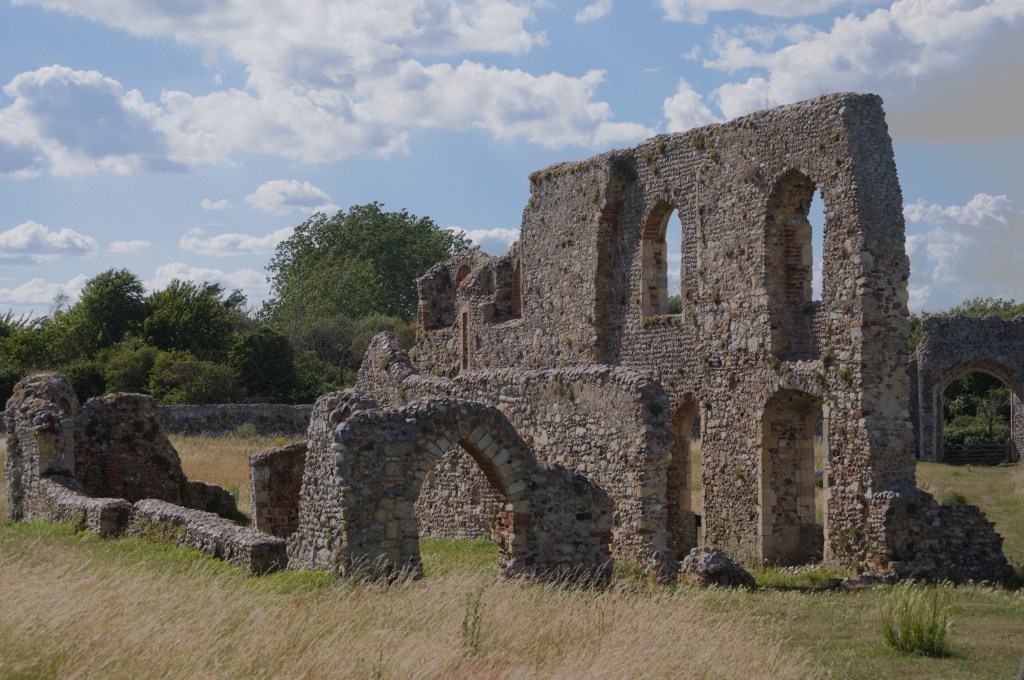
If you visit, please be respectful of the peace, the land, and the silent stories of what was once a lively port, and is now one of the world’s biggest underwater cities. Some say that, on the right night with the right storm, you can still hear the bells toll from beneath the waves.
Continuing to rise as usual, the tide dashed over his feet and legs without respect to his royal person. Then the king leapt backwards, saying: ‘Let all men know how empty and worthless is the power of kings, for there is none worthy of the name, but He whom heaven, earth, and sea obey by eternal laws.”


Leave a comment